UX Design Agency Dublin 2026: Building for English-Speaking + EU Markets
Guide to choosing a UX/UI design agency in Dublin in 2026. Pricing, fintech and SaaS specialization, post-Brexit EU advantages, and what international tech companies should know.
5 min read
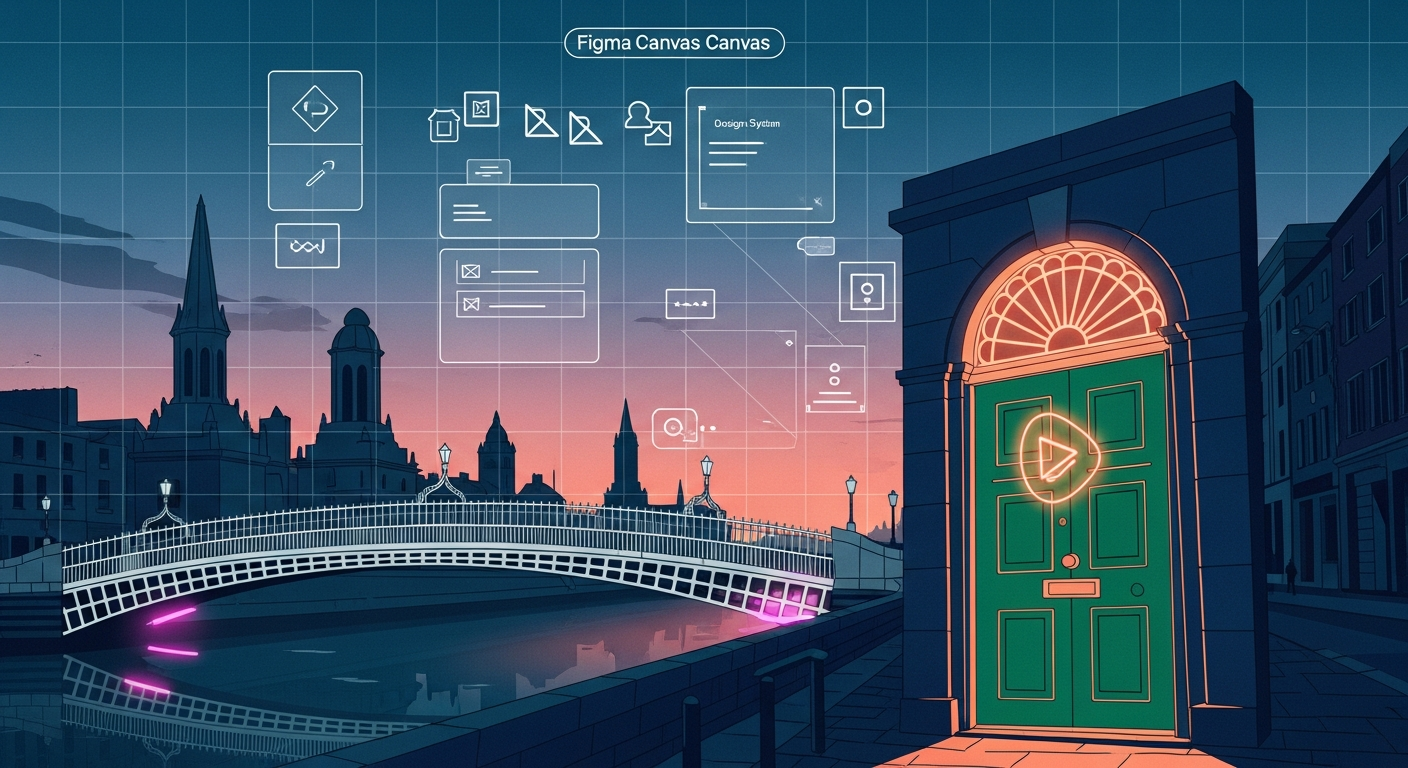
Dublin sits at a unique intersection in 2026: native English-speaking, fully EU-based, GDPR-fluent by default, and home to the European headquarters of more US tech giants than any other city. Combined with talent pricing 25-35% below London and a tech ecosystem that produces designers and developers fluent in both US-style speed and EU-style compliance, Dublin has become the natural choice for many international tech companies looking for a UX partner.
This guide is for international founders, marketing leaders, and product owners considering Dublin agencies — whether you're a US company expanding into EU, an EU company wanting English-first design, or a global brand wanting access to Dublin's specialized talent.
TL;DR — what to look for in a Dublin UX agency 2026
A solid Dublin UX/UI agency in 2026 should:
- Demonstrate fintech, SaaS, or tech-platform experience — Dublin's strengths
- Show GDPR-by-design, not afterthought — the local default
- Have native English fluency for both US and UK markets
- Operate in modern stacks (Figma + React/Next.js + headless CMS)
- Use AI-first workflows (Cursor, Claude Code, Figma AI integrated)
- Offer EU compliance services (data residency, EU representative)
- Bridge US/EU communication styles smoothly
Why Dublin works for international tech
Three structural advantages shape Dublin's UX market:
1. Multinational tech density. Google EMEA, Meta EU, LinkedIn EU, Stripe EU, HubSpot EMEA, Intercom HQ, Salesforce EMEA — all are headquartered in Dublin. This concentration produces designers who've worked on world-class products and can bring those standards to client work.
2. GDPR is muscle memory. Dublin agencies have lived through GDPR, Schrems II, the DSA, and DORA from the EU side. For US companies expanding into EU, this expertise is non-negotiable — and increasingly hard to find in agencies that didn't grow up with it.
3. Talent pricing arbitrage. Senior Dublin designers cost €70-110/hour vs. €100-150 in London or €120-180 in NYC. For EU/UK projects, the pricing gap creates clear ROI without quality compromise.
The 4 dominant Dublin sectors
1. Fintech and payments
Dublin has become Europe's fintech capital. Stripe, Revolut, N26, many neobanks, payment infrastructure companies, and crypto firms all have major Dublin operations. Agencies serving fintech need:
- Strong accessibility practice (WCAG 2.2 AA mandatory for most regulated products)
- Trust-building UX patterns (KYC flows, transaction confirmations, fraud prevention)
- EU regulatory knowledge (PSD2, DORA, MiCA for crypto)
- Mobile-first design (most fintech use is mobile)
2. SaaS and developer tools
Intercom HQ, HubSpot EMEA, many Y Combinator alumni — Dublin's SaaS scene is mature. Agencies serving SaaS deliver:
- Product marketing sites with conversion optimization
- Documentation sites that are search-optimized
- Pricing pages with A/B test infrastructure
- Onboarding flows for product activation
- Multilingual setup for European expansion
3. Multinational tech EU operations
Google, Meta, LinkedIn, Salesforce — all use external Dublin agencies for European market work, regional campaigns, and localization projects. This work pays well and forces agencies to operate at multinational standards.
4. Digital health and edtech
A smaller but growing sector. Trinity College and DCU produce strong design and engineering talent that's increasingly going into these spaces.
Types of UX agencies in Dublin 2026
Small boutique studios (3-15 people)
- Price: €10,000-60,000 per project
- Best for: SaaS, fintech, design-heavy projects
- Strength: senior talent, fast decisions, modern stack
- Common stack: Figma + Next.js + Tailwind + Vercel
Mid-size agencies (15-50 people)
- Price: €40,000-300,000 per project
- Best for: enterprise SaaS, fintech with regulatory complexity, multi-surface design systems
- Strength: multidisciplinarity, GDPR expertise, US/EU bridge experience
Large traditional agencies (50+ people)
- Price: €100,000-1,000,000+
- Best for: enterprise clients, financial services, government
- Weakness: higher overhead, sometimes slower decisions
International remote agencies with Dublin presence
- Price: variable
- Best for: companies needing US/EU bridge with senior talent
- Strength: blend of cultures and pricing tiers
How to evaluate a Dublin agency in 5 conversations
Conversation 1 — Intro (30 min): present your business, agency presents 2 sector-relevant case studies. Ask: "Have you worked with similar fintech/SaaS/whatever clients in Dublin or wider EU?"
Conversation 2 — Sector deep dive (45 min): walk through a comparable case end-to-end. For fintech: how did they handle KYC flows, PSD2 compliance? For SaaS: how did they handle pricing page A/B tests, onboarding metrics?
Conversation 3 — Meet the team (30 min): the actual designers and developers. Verify English fluency, GDPR knowledge, and modern stack experience.
Conversation 4 — Discovery + technical sprint (60 min): paid discovery (€3,000-10,000, 1-3 weeks) before quoting fixed price.
Conversation 5 — Closing (30 min): based on discovery output, final proposal with clear phases, prices, milestones.
Dublin-specific red flags
- No GDPR conversation when your project involves EU users. Dublin agencies should bring this up first, not you.
- Generic "tech" portfolio without sector specifics. Fintech, SaaS, edtech all have distinct UX requirements.
- No multi-region thinking when your audience spans US + EU. Some Dublin agencies focus only on one side.
- No accessibility practice for projects requiring it. Critical for fintech, healthcare, public sector.
- WordPress for everything in projects that clearly need different stacks.
Common mistakes when hiring in Dublin
1. Picking on price only. Dublin's competitive pricing makes it tempting to go cheap. The cheapest Dublin agencies still cost more than the cheapest Eastern European ones — you're paying for senior English-speaking talent. Make sure that's what you actually get.
2. Not validating sector experience. A great agency that's never done fintech is paying their learning curve on your project. Find one with vertical depth.
3. Skipping discovery. Same as everywhere — €5K saved on discovery costs €50K in scope creep.
Decision-day questions
- Does this team speak our market natively (US, UK, broader EU)?
- Do they have specific experience in our sector?
- Will the senior designer who pitched actually do the work?
- Are they fluent in GDPR by default, or only when asked?
- Do they have AI-assisted workflows operational, not just talked about?
A UX project lasts 3-9 months. You're hiring people, not a Dublin office.
If you're evaluating Dublin UX agencies right now, we offer a free 30-minute call to review your brief. Honest assessment from a studio that has worked extensively with Dublin's tech ecosystem.
Frequently asked questions
About the author
Design & Engineering Team
The UX Studio design and engineering team publishes practical notes on digital strategy, user experience, accessibility and implementation. The articles draw on work documented in the portfolio, including EduSpera, ClassWolf and the SupaSailing / SupaMaritime ecosystem.