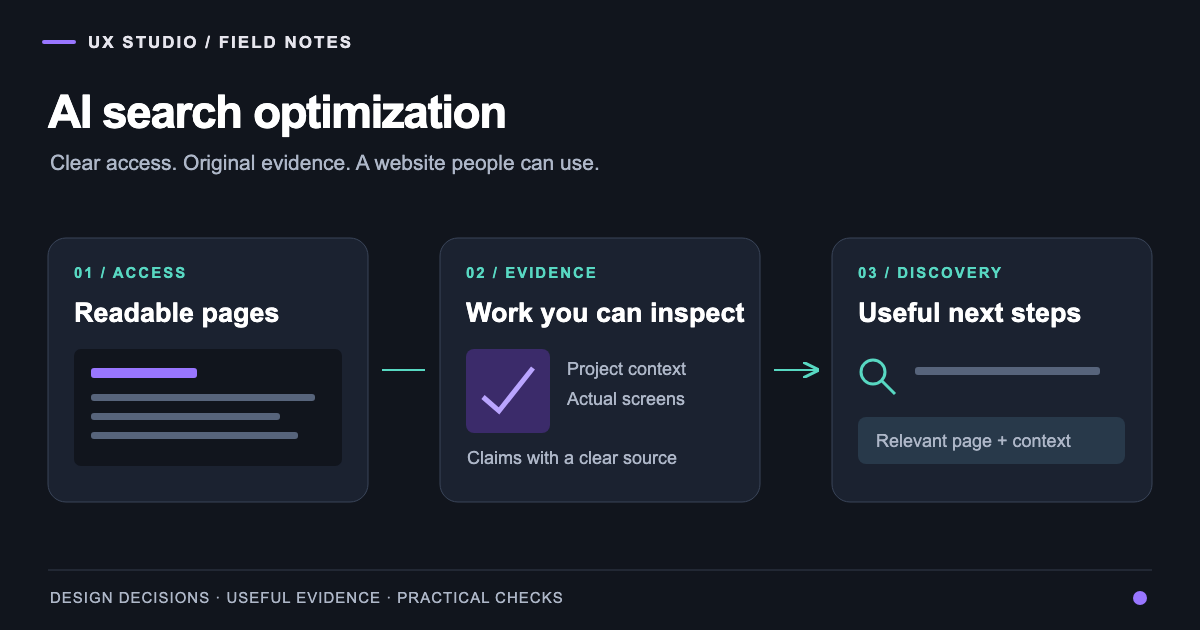
Web Design in Mallorca 2026: A Guide for Founders, Expats, and International Brands
How to choose a web design studio in Mallorca in 2026. Pricing, multilingual SEO, the local market, and the right partner if you run a hotel, charter, real estate or D2C brand on the island.
6 min read
If you're an English-speaking founder, expat, or international brand looking for a web design agency in Mallorca, the playing field looks very different from London, Berlin, or New York. The island has gone from a peripheral market with few options to a multilingual digital hub where local boutique studios, European agencies with offices in Palma, and globally remote teams all compete for the same brief. This guide is for English-speakers who want to navigate it without wasting weeks or budget.
TL;DR — what to look for in 2026
A solid web design studio in Mallorca today should:
- Operate fluently in three languages: Spanish, English, and German (mandatory for tourism, real estate, and hospitality)
- Have experience in at least one of the core verticals: real estate, hospitality, yacht charter, food & wine, or artisanal D2C
- Show case studies with measurable outcomes — bookings, conversions, leads — not just pretty screens
- Build local SEO into the design phase, not as an "extra package"
- Know how to deploy the site, not only design it in Figma
- Have a clear position on AI-assisted design — in 2026, using AI for repetitive design tasks is the standard
Why Mallorca isn't a typical Spanish market
Three factors make Mallorca unique among European mid-sized digital markets:
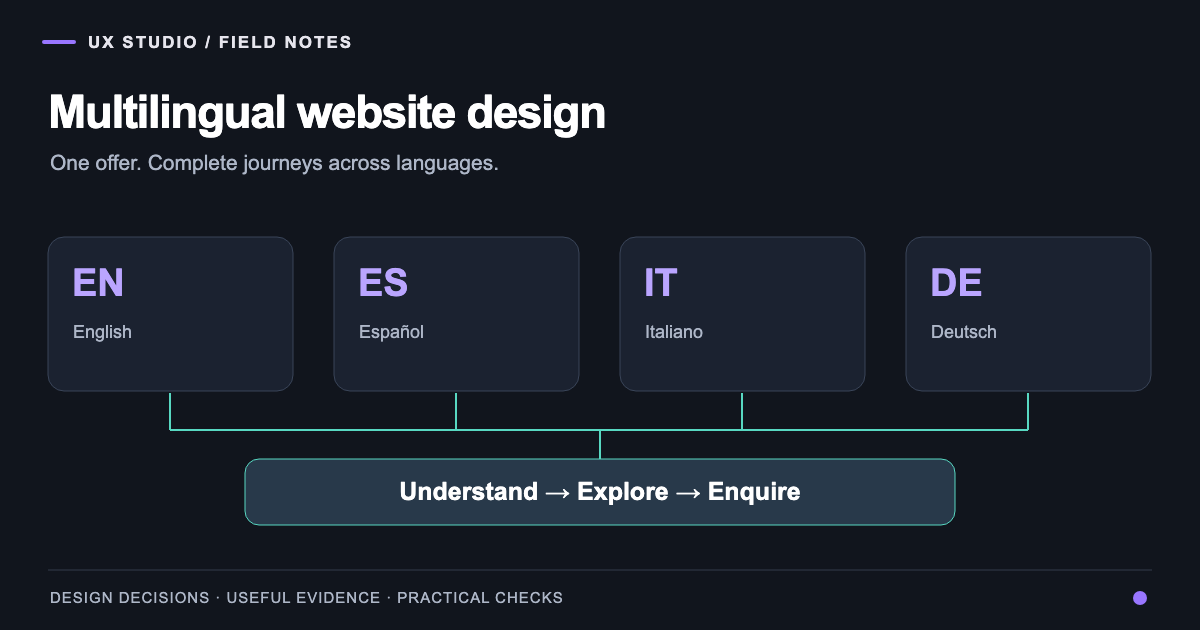
1. Triple-language reality. The island lives in three languages: Spanish, English (UK/Irish/Scandinavian/American/Australian visitors and digital nomads), and German (the second-largest tourist market and a huge expat community in Palma and the south). A website without English and German loses 60-70% of potential traffic. Studios from outside the island routinely underestimate this.
2. Extreme seasonality. June-September concentrates 70% of tourism traffic. Design must absorb massive spikes (server, image optimization, well-configured CDN) and keep generating leads in low season (evergreen SEO, blog, email marketing).
3. Real estate and tourism regulation. ETV licenses, vacation rental rules, the Balearic Tourism Law — any site selling vacation rentals must show specific regulatory data. Outside agencies often don't know this.
Types of studios operating in Mallorca
Local freelancers (1-3 people)
- Price range: €2,000-8,000
- Best for: simple corporate sites, landing pages, small ecommerces
- Limitation: capacity. A freelancer juggles 3-5 projects in parallel; if there's a delay, there's no plan B
- When to choose: tight budget, clear scope, flexible timeline
Local boutique agencies (5-15 people)
- Price range: €8,000-40,000
- Best for: medium-to-high complexity projects with need for hand-holding
- Strength: know the market, speak the languages, available in local hours
- Weakness: sometimes lack specialized profiles (data, performance marketing)
Large Madrid/Barcelona agencies serving Mallorca clients
- Price range: €20,000-100,000
- Best for: hotel groups, big real estate firms, established brands
- Strength: muscle, processes, diverse profiles
- Weakness: "the Mallorca client" is the exception in their book; you can pay agency overhead without getting local attention
European studios with a Palma office
- Price range: €15,000-80,000
- Best for: projects with international vision, multilingual ecommerce, digital products
- Strength: blend of European know-how and local knowledge
- Weakness: variable; check case-by-case
Globally remote studios
- Price range: very wide (€5,000-200,000)
- Best for: startups and purely digital businesses without local dependencies
- Weakness: for traditional Mallorca businesses (hotel, restaurant, real estate), they lose the market-knowledge advantage
The 5 key sectors in Mallorca in 2026
1. Real estate and second-home tourism
The largest sector by digital budget on the island. A studio for Mallorca real estate must understand:
- Multilingual property search with advanced filters (zone, price, type, license)
- Interactive maps with clusters and routes to amenities
- Virtual tours (360° or video walkthroughs)
- Contact forms segmented by language and nationality (a Brazilian or German lead expects different flow patterns)
- CRM integration with first-response automation
Typical case: a real estate agency with 80 listings and multilingual traffic closes 30-50% more qualified leads when the site is properly designed, without changing the ad budget.
2. Hospitality and restaurants
Boutique hotels, agroturismos, Michelin restaurants, specialty cafés — all compete for visibility on Google Maps and reservation engines. Priorities:
- Direct bookings without OTA commission (PMS integration with Cloudbeds, Mews, etc.)
- Premium photography optimized (lazy loading, AVIF/WebP)
- Visual storytelling — tourists don't book beds, they book experiences
- Schema.org LocalBusiness for local ranking
- TheFork/OpenTable integrations for restaurants
3. Yacht charter and maritime services
Mallorca has one of Europe's largest charter fleets. A site for nautical companies needs:
- Real-time availability calendar (fleet ERP integration)
- Filters by boat type, length, crew, base
- Online booking and deposits (Stripe Connect, Mollie)
- Educational content (licenses, navigation zones, insurance) — ranks for long-tail SEO
- Versions in at least ES/EN/DE/FR
4. Artisanal ecommerce
Olive oil, Binissalem wine, sobrasada, natural cosmetics, artisanal fashion — Mallorcan ecommerce grows 15-20% yearly. Priorities:
- Shopify or WooCommerce depending on volume (Shopify for <500 SKUs, Woo for complex catalogs)
- International logistics (intra-EU and UK shipping)
- Product storytelling — you're not selling a bottle, you're selling DOC and tradition
- Email marketing with segmentation (first-purchase, repeat, dormant)
5. Professional services and law firms
Lawyers, architects, consultants — mature market that demands classic but digital design:
- Visual credibility (professional photography, testimonials, cases)
- Lead capture via well-designed forms + CRM
- Technical blog for SEO + authority positioning
- Languages ES/EN minimum for expats
How to evaluate a studio in 5 meetings
Meeting 1 — Intro (30 min): present your business; the studio presents who they are and 2 relevant cases. Ask: "Have you worked with companies in my sector in Mallorca?" Vague answer = red flag.
Meeting 2 — Case study deep dive (45 min): ask them to walk through a similar-sector case end-to-end. What problems, what decisions, what metrics moved. Listen for concrete results vs. "it turned out beautiful."
Meeting 3 — Meet the team (30 min): the designer and developer who'll work on your project, not the sales director. If the studio resists, big red flag.
Meeting 4 — Proposal + discovery sprint (60 min): a serious studio doesn't quote a full price without discovery. They'll offer 1-2 paid weeks (€2,000-5,000) of discovery with clear deliverables.
Meeting 5 — Closing (30 min): post-discovery, definitive proposal with phases, prices, timeline, milestones. Decision time.
Mallorca-specific red flags
- Can't explain multilingual SEO. Ask how they handle hreflang and duplicate content across ES/EN/DE. If they hesitate, it shows.
- Only speak one language. If the team has no native English speaker and no native German speaker, they can't QA the localized copy.
- Use WordPress for everything. WordPress is fine for blogs and simple sites; for serious ecommerce or a booking platform, probably not the best 2026 choice.
- Don't mention performance. In Mallorca, much traffic comes from mobile on flaky 4G (beach, village, secluded villa). A slow site loses 40% of users before load.
- No Mallorca portfolio. It's not a deal-breaker if they have a strong portfolio elsewhere, but ask how they'll adapt to local context.
The 3 most common hiring mistakes in Mallorca
1. Picking the cheapest to save money. In web design, cheap almost always means rebuilding in 12-18 months. The difference between a mediocre and a good studio is €5,000-10,000 — small compared to the revenue a well-built site generates over 3-5 years.
2. Not investing in discovery. Skipping discovery saves €3,000 and costs you €30,000 in scope changes during the project. Always pay for discovery.
3. Confusing "beautiful" with "converts." A beautiful site that doesn't convert is a portfolio piece, not a business asset. Prioritize studios that talk about metrics, flows, data — not just aesthetics.
Final questions for decision day
When choosing between two or three finalists:
- Do I trust they'll understand my business, not just execute Figma?
- Would I want to work with these people when something goes wrong?
- Are they curious about my problem, or selling me their template?
- Did they respond fast and well during the sales phase? If not, it gets worse during delivery.
A project lasts 3-12 months. You're hiring people, not portfolios.
If you're evaluating studios in Mallorca right now and want a second opinion on your shortlist, we offer a free 30-minute call to review your brief. No pitch, no upsell — just an honest assessment from a studio that works on the island and knows the market.
Frequently asked questions
About the author
Design & Engineering Team
The UX Studio design and engineering team publishes practical notes on digital strategy, user experience, accessibility and implementation. The articles draw on work documented in the portfolio, including EduSpera, ClassWolf and the SupaSailing / SupaMaritime ecosystem.